The histories of horses and humans are interwoven; in many ways, modern culture was built on the backs of horses. Romantic stories from the era before automobiles and airplanes illustrate the deep bond between steed and rider. The gentle, nonjudgmental presence of horses offers reprieve amid the hustle, speed, and expectations of the 21st century.
Stemming from that long history, equine-Assisted Services (EAS) is a wellness path designed for people from all walks of life that fosters healing by forming relationships with horses. EAS services fall into three categories: Equine-Assisted Therapy, Equine-Assisted Learning, and Equine-Assisted Horsemanship. Park City and the surrounding Wasatch Mountains form a picturesque backdrop for EAS participants.
Equine-Assisted Service organizations in Park City and Summit County
National Ability Center (NAC)
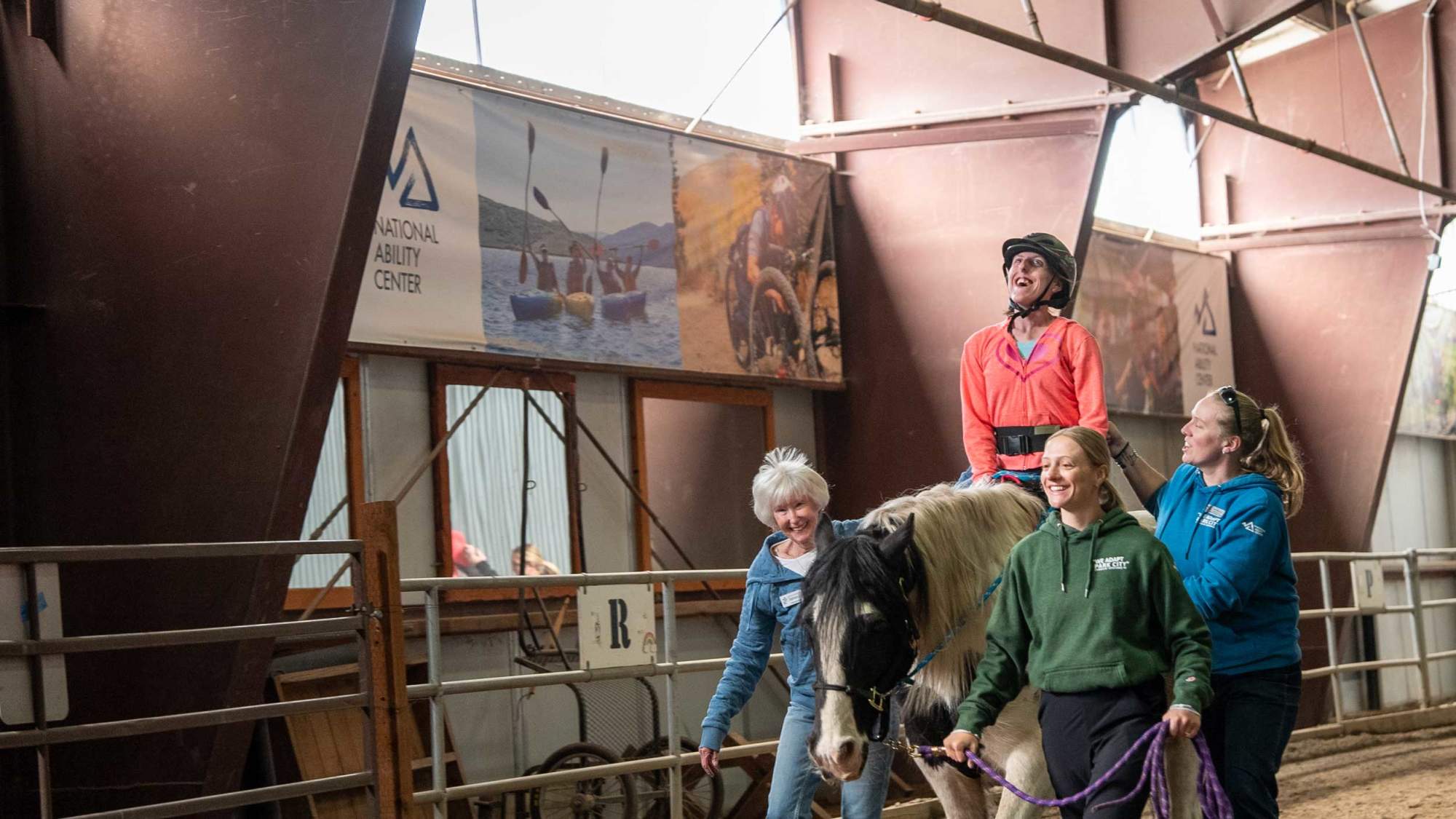
The NAC’s equestrian program began in 1988, just four years after the organization was founded. By 1999, an indoor riding arena was constructed at The Ranch, the main campus at Quinns Junction, to facilitate year-round equestrian activities. Sara Justusson, the NAC Equestrian Program Manager, shares the program’s history. “In 2011, the National Ability Equestrian Center became a Professional Association of Therapeutic Horsemanship International (PATH International) Premier Accredited Center.” The PATH certification is significant because it creates industry standards, establishing criteria and guidelines for Equine-Assisted Services for centers and professionals. The NAC holds a Premier Accredited status, which is the highest level of safety and quality recognized by PATH.
Sara’s personal story illustrates the impact of Equine-Assisted Learning and the NAC programs. “I was diagnosed with rheumatoid arthritis when I was 15. As I've grown older, it has progressed quite severely,” she describes how her relationship with horses helps her rise above limitations. “In those moments when I struggle, horses are just there… They tend to be patient and a comfortable presence.” Sara’s personal experience enables her to embody the NAC ethos of empowering all people. “I want to be a person who tells other people yes,” she explains the NAC’s approach to creating possibilities through the equestrian program. “We train our horses very specifically so that they can help anyone, with any diagnosis, of any ability, and any skill level.”
The NAC served approximately 3,000 experiences in 2025 and aims to grow the program to around 6,000 or 7,000 experiences over the next few years. The programming includes all three EAS modalities. “Equine-Assisted Learning is an unmounted program,” Sara explains. “Participants will learn anything from how to non-verbally communicate with horses to beginning training of horses to basic horse care or in-depth horse care.” For the Equine-Assisted Therapy program, the NAC works with licensed therapists. “We currently partner with the VA in Salt Lake City to provide Equine Assisted Psychotherapy… That is when an outside mental health professional comes in, and we provide the horses and staff to ensure everybody stays safe.”
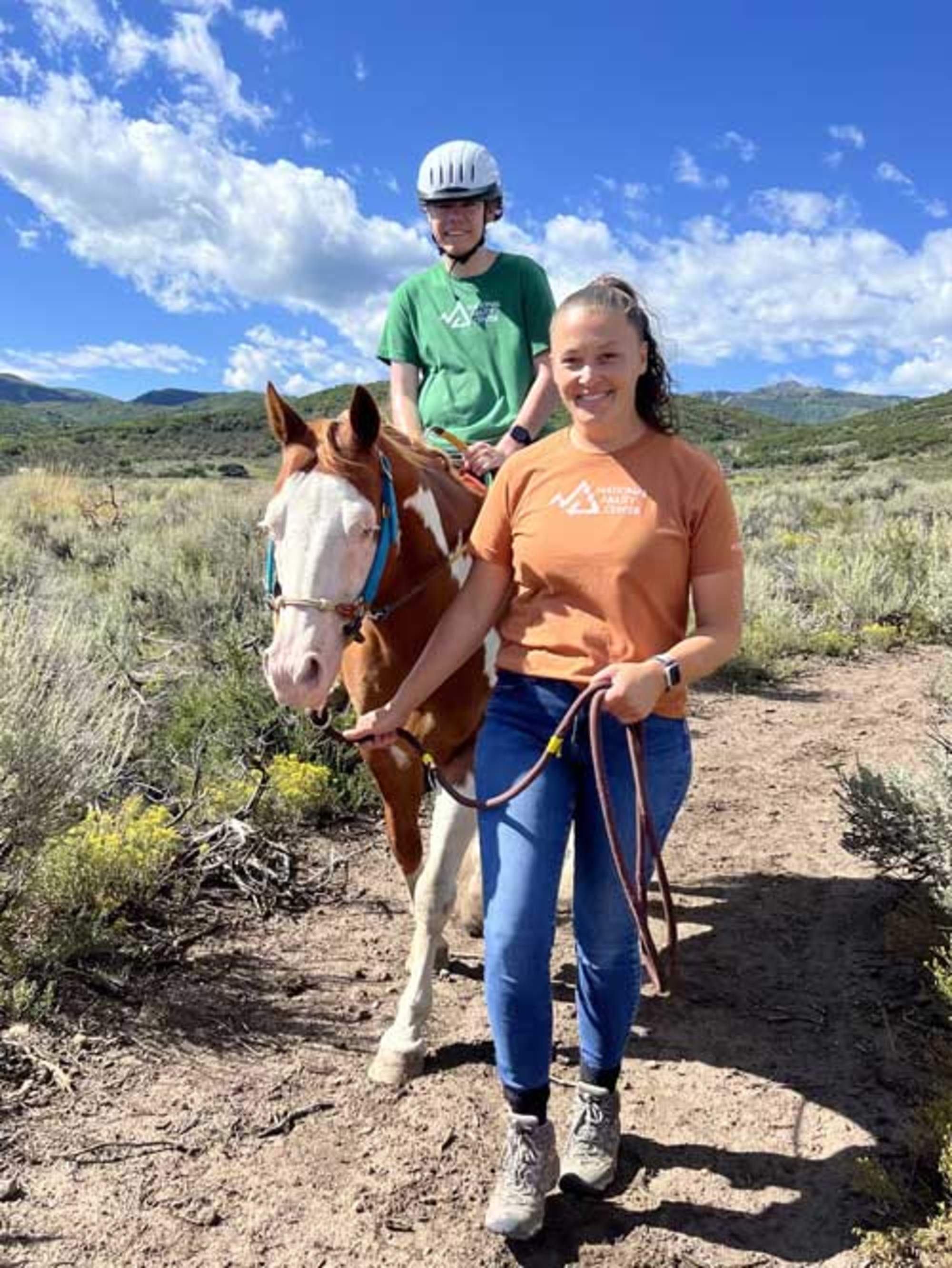
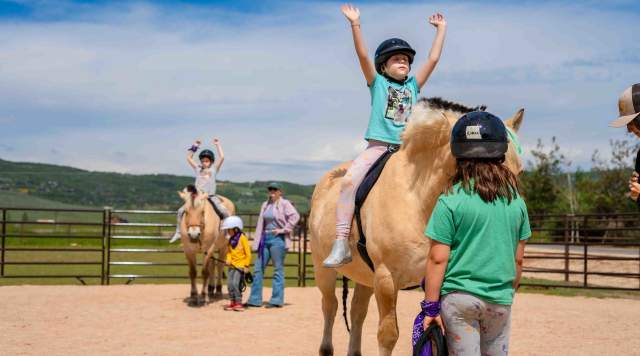
The adaptive riding program empowers people of all abilities to engage in a horsemanship experience. “We have areas that are wheelchair accessible and accessible for people who struggle with uneven surfaces,” Sara describes how the riding arena and staff support diverse users. “We have different ways to get participants on and off horses that are comfortable for both the horse and the participant.”
It's a team effort to create a successful adaptive riding, Equine-Assisted Learning, or Equine-Assisted Therapy experience. “We start by getting to know the participant and identifying their goals… It's a relationship between the instructor and the participant, the chemistry with the horse, and then with the support team.”
Equellness / Park City Horse Experience
Alejandra Lara’s journey with Equine Assisted Services began 25 years ago at the NAC. When she moved to Park City from her family’s cattle ranch in the mountains of Chile, she left behind her best friends (horses) and faced linguistic isolation. “I found myself in Park City, Utah, as an immigrant. I did not speak the language enough to have conversations with people. What I could speak was horse, and I started volunteering at the National Ability Center in ’99.”
Alejandra, who is a certified Equine Specialist in Mental Health and Learning and Therapeutic Riding Instructor, played a key role in helping to develop the NAC’s EAS program, with the vision of creating more accessible services for a broader audience. “It (EAS) is a program where people who don't have access to riding the horses can be engaged with horses through ground-based activities.” Equine-Assisted Services supports a more diverse range of populations engaging with horses, including military or corporate groups, individuals who weigh more than 200 pounds, and those who are not yet ready to ride horses.
Alejandra believes that by creating more EAS programs in the community, a greater number of people can find wellness. After almost two decades, she stopped working with the NAC to focus on building other organizations in the community. “With accessibility in mind, I felt that there was a whole other sector in the community that was missing the opportunity to connect with horses from this mindful and heart-opening opportunity to learn about ourselves through Equine-Assisted Services,” she explains. “I created my own business, Park City Horse Experience, for the whole community and worked with individuals towards wellness. The feature program I started was horse meditation circles, which allowed people from all walks of life to participate.”
Alejandra’s latest venture is serving as the executive director of the nonprofit Equellness, an Equine-Assisted wellness center in the Silver Creek neighborhood of Park City. Alejandra considers the NAC a lifelong partner and directs people to the organization for adaptive riding experiences. At Equellness, the focus is on Equine-Assisted Learning and Equine-Assisted Therapy. “Accessibility point is more invisible, emotional, and mental perspective, rather than physical,” she explains the demographic at Equellness. “We developed a way of working with therapists and residential treatment centers for recovery and trauma… What I do with the horses and the clients is very much about learning self-regulation tools, mindfulness, and being in the present moment.” Equellness also specializes in creating wellness and healing for corporate groups. “At this moment, there's a lot of anxiety, a lot of overwork,” Alejandra shares. “We are providing wellness at an organizational level.”
The Healing Power of Equine-Assisted Services
Equine-Assisted Services are building fresh paths to wellness and healing through connection with horses. The diversity of programs ensures that any participant can engage with horses.
Alejandra describes how the EAS approach creates opportunities for all people. “Our experiences are intentionally accessible and process-oriented, meeting each person exactly where they are. We move at a pace that fosters safety, empowerment, and personal choice in how to engage with the horses. This way of working makes the experience welcoming for all, whether clients have spent a lifetime around horses or are meeting them for the first time. No prior horse experience is needed to benefit from the peace, connection, and joy that naturally arise when we enter into a relationship with these sentient partners.”