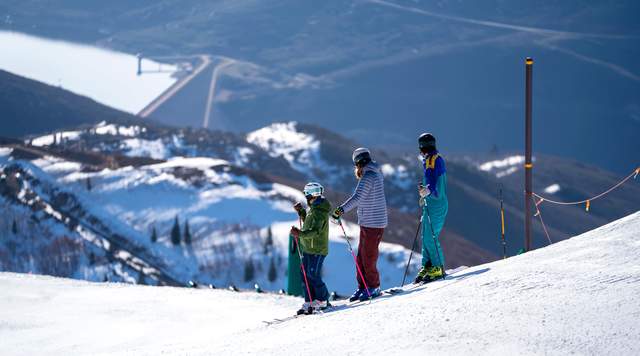
Growing up, you never would have caught me willingly doing any kind of cardio. I still remember being forced to mountain bike up Spiro for dryland training as an alpine ski racer in Park City. Heart pounding, lungs burning, grinding uphill while thinking this is the absolute worst. That breathless sweaty effort was never something I enjoyed.
In my early 20s, though, while living outside of Anchorage, Alaska, I was introduced to cross country skiing. And to my own surprise, I loved it.
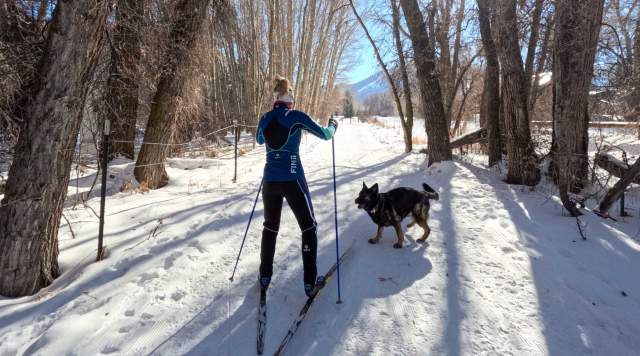
When I moved back to Utah, one of the first things I did was get my husband a set of skate skis to introduce him to the sport. Now it’s one of our favorite ways to spend time together in winter. Our dog Ziggy even gets to join in as our skijoring beast, helping pull us up the steeper hills while happily chomping snow along the way.
Somewhere between being an alpine-only skier and becoming a part-time “Nordork,” I learned that cross country skiing comes with its own thoughtful art of layering. If you’ve ever searched questions like “What do I wear for skate skiing?” “How do I layer for Nordic skiing?” “Should I wear a jacket for skate skiing?” or “What temperature is too cold for cross-country skiing?” this guide is for you.
Base Layer: Keep It Light and Breathable
Nordic days always start with a thin, moisture-wicking base layer. Think of something you would wear for a spring or fall trail run. Anything too warm or thick and you’ll sweat through it within minutes leaving you cold whenever you stop and too hot once you get going again.
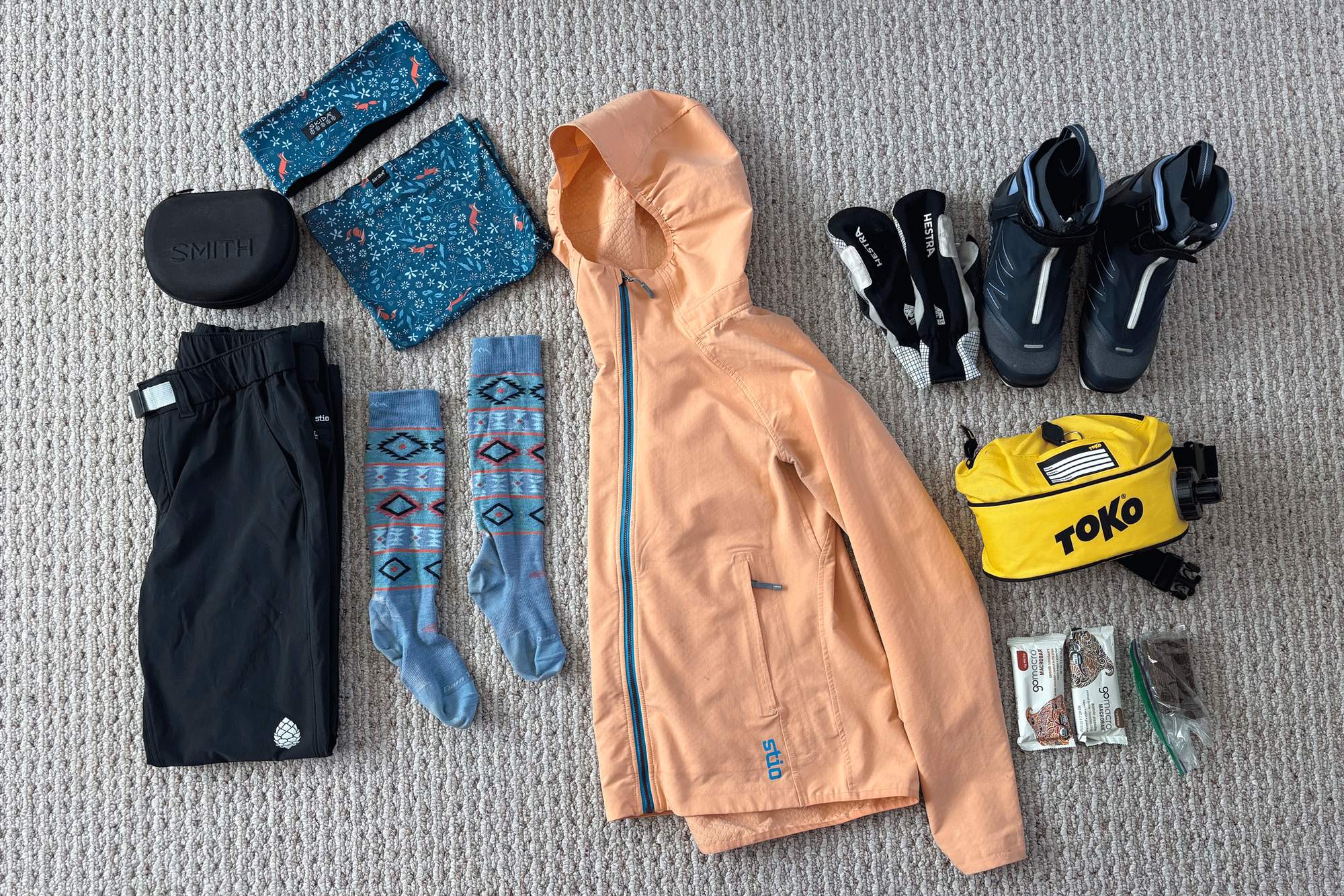
For bottoms, I typically wear nordic specific softshell pants. On colder days, I’ll layer with a lightweight merino wool baselayer for extra warmth, but I always try to keep it minimal to not restrict movement.
Midlayer: Optional, Packable, Strategic
Unless it’s truly cold or windy, I rarely add an extra midlayer for skate skiing. When temperatures dip below 10F, I’ll throw on a thin vest or lightweight insulating layer under my jacket. The key is keeping it packable. If you bring a midlayer, make sure you have a way to stash it once your body warms up.
Too many layers can get uncomfortable fast, which is why I live by the mantra “Be bold. Start cold.” I aim to feel slightly chilly when I step out of the car so I don’t overheat once I’m moving on the trails.
All the gear for lapping the track!
Outerwear: Wind-Blocking Without Bulk
For skate skiing, I stick to Nordic-specific or lightweight winter running jackets. These provide the perfect amount of wind protection with tons of mobility and breathability. It’s also nice to have a jacket that has a little bit of water repellant on it. That way, if it does start to snow while you’re skating, the snow beads and rolls right off you so you can keep going throughout any weather changes.
Avoid heavy insulation like down. You’ll sweat through it and freeze the moment you stop.
Pack: Where Hydration Meets Function
I never head out for a cross-country ski day without a hydration pack. White Pine Touring carries a great selection of packs that are practical, affordable, and designed specifically for Nordic skiing days around Park City.
When choosing a pack, I look for two things: enough space for water to match how long I plan to be out, and enough extra storage for snacks. Fuel matters. A great ski can quickly turn into a miserable one if you bonk while on the trails. I always pack plenty of easy-to-eat carbs (I’m looking at you Cinnamon Bears) to keep my energy up. With good hydration and solid snacks it’s easy to stay out longer to enjoy everything Park City’s cross country trails have to explore.
Accessories: Small Items That Make a Big Difference
Neck warmer
Hat or head band: Light and breathable is key.
Gloves: A thin glove like a running glove or a thin mitten keep your hands warm but not sweaty.
Socks: Thin ski socks or even running socks work perfectly.
Sunglasses: I always like photochromic lenses for changing light conditions through trees and open fields.
Sunscreen and lip balm: Even on cold cloudy days you can get more sun exposure than you think at this altitude.
Cross-country skiing has taught me that comfort on the trails isn’t about piling on layers, it’s about learning how your body moves, warms up, and responds to the conditions. Once you dial in a system that keeps you light, breathable, and just a little chilly at the start, everything clicks. You move better, ski longer, and actually enjoy the rhythm of gliding through winter. If you're unsure of what gear to buy based on this list, stop by a local ski shop in Park City like the White Pine Nordic Center. They have the gear and expertise you need to get the right cross country clothing and equipment.
Whether you’re heading out for a quick solo loop, a family ski with your partner, or a dog-powered adventure, thoughtful layering makes it easier to explore Park City’s trails and settle into that steady, meditative flow that keeps you coming back. Park City’s cross-country season is too good not to get out there.
Whether it’s the anticipation of discovering what could be your new favorite flavor on a…
Author
Abby Stanislaw
Abby grew up ski racing on the Park City Ski Team, where she developed a passion for outdoor sports and the grit needed to excel. Now the owner of Progression Physical Therapy, LLC and a contract physical therapist for the US Ski and Snowboard Team, she helps athletes and outdoor enthusiasts return to the activities they love, whether recovering from injury, postpartum, or just trying to excel at their sport. When out of the clinic you can find Abby skiing, mountain biking, teaching Pilates, and enjoying all that Utah has to offer. Follow her adventures on Instagram @skiingabby or visit www.progressionphysicaltherapy.com.