Ten years in Park City, and I've skied past its old mining buildings more times than I can count. Each winter, I'd notice the weathered headframes from the chairlift without knowing the stories behind them. This fall, I set out to learn more about them.
On a cool, sunny morning, my friend Morgan and I met on a still-sleepy Historic Main Street to hike the new Park City Historic Mine Route, a 7-mile loop that connects 24 historic mining sites in the hills above town. I'll admit my mountain bike was calling my name. But I wanted to be fully present the first time through the free audio guide, so we laced up our shoes instead and saved the bike loop for another day.
Park City Historic Mine Route Details
-
Distance: About 7 miles. We finished in about 3 hours at a relaxed pace.
-
Elevation gain: About 1,200 feet
-
Difficulty: Moderate Plus, with easier options
-
Start and finish: Park City Museum, 528 Main Street
-
Audio guide: Free TravelStorys audio guide, plus 18 interpretive signs along the route
-
Shorter option: Ride Town Lift or PayDay to the Silver King Mine Complex
-
Biking: A longer variation of about 10 miles
-
Guided hikes: Offered by the Park City Museum
-
Restrooms: Miners Park (415 Main Street) and next to the museum
-
What to bring: Water, sun protection, layers, earbuds at low volume so you can hear bikers
-
More info: hmr.parkcityhistory.org
Where It All Begins: The Park City Museum
The Park City Museum is where we began. Smiling faces greeted us at the door, and the gift shop is full of work by local artists I know from around town. I have fond memories of bringing my nephews here to explore the old city hall, visit the jail, and linger at the mining wall, which is still one of my favorite parts. The building itself is part of the story. As Park City's old city hall, it has watched over Main Street for generations, and the old jail downstairs holds a few stories of its own.
We pressed play and set off. The audio guide kept us on our toes, made us laugh more than once and startled us more than once, too, chiming in before we'd even spotted the next marker. From the museum, the route winds through Old Town to Le Depot. Today, the building is home to a French restaurant, but it was once Park City’s railroad depot, and the audio guide’s train joke had us both laughing out loud on the sidewalk. The railroad changed life here. It made it easier for miners’ wives and families to visit and eventually settle in town, which helped turn a mining camp into a community. I’ve never actually eaten at Le Depot, but after hearing its story, it’s officially on my list.
Then came the rails set into the sidewalk, a quiet piece of history most of us walk right over. I've passed that sign countless times, but this time I stopped to read it. Picturing miners hauling heavy loads along these same streets, I thought about the folks who struggle to carry their kids', or even their own, ski gear. A few minutes with history has a way of putting our everyday grumbles in perspective.
At the miners' statue, which honors the unnamed miners who worked these hills, we got quiet for a minute. Their days were long and hard. The weathered homes and storefronts around us once sheltered their families, hosted their celebrations, and outlasted them all. No wonder so many of Old Town's old buildings come with a ghost story or two. Standing there, I felt lucky to experience Park City the way we do today.
Climbing Treasure Hill
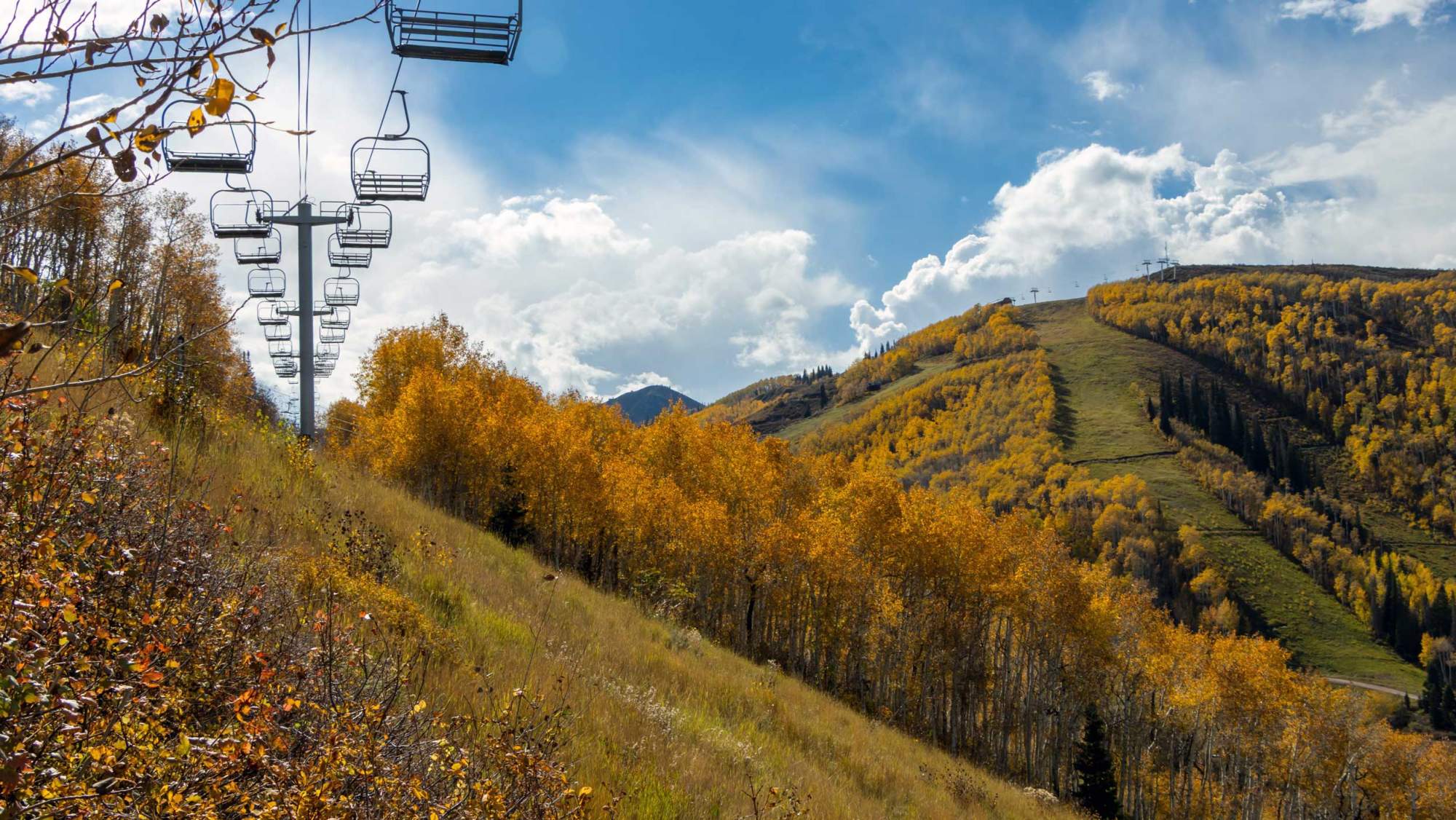
From town, the route heads uphill onto Sweeney's Switchbacks. The audio guide suggests a speaker or earbuds at low volume so you can hear bikers and fellow hikers along the trail. Confession: that's not usually how I hike. With a friend, I'm usually chatting, and solo, I usually have a podcast going. But the stories gave our catch-up session a fun new rhythm, and we still managed to cover the important updates.
At the Town Lift stop, mining meets outdoor recreation. Old tramway towers still stand nearby, a reminder that skiing arrived here in the 1930s, and by the 1960s, mining had faded. If you'd rather skip the climb, this is also the spot to hop on Town Lift and ride up toward the Silver King. Farther up, we learned there are roughly 1,200 miles of tunnels beneath Park City Mountain and Deer Valley, enough to stretch from Park City to Chicago. Wild, right? Locals even built a ski jump up here in the 1920s, which had me reminiscing about sledding with my family at Ecker Hill in Pinebrook. Built in 1928, it's another historic ski jump that's now on the National Register of Historic Places.
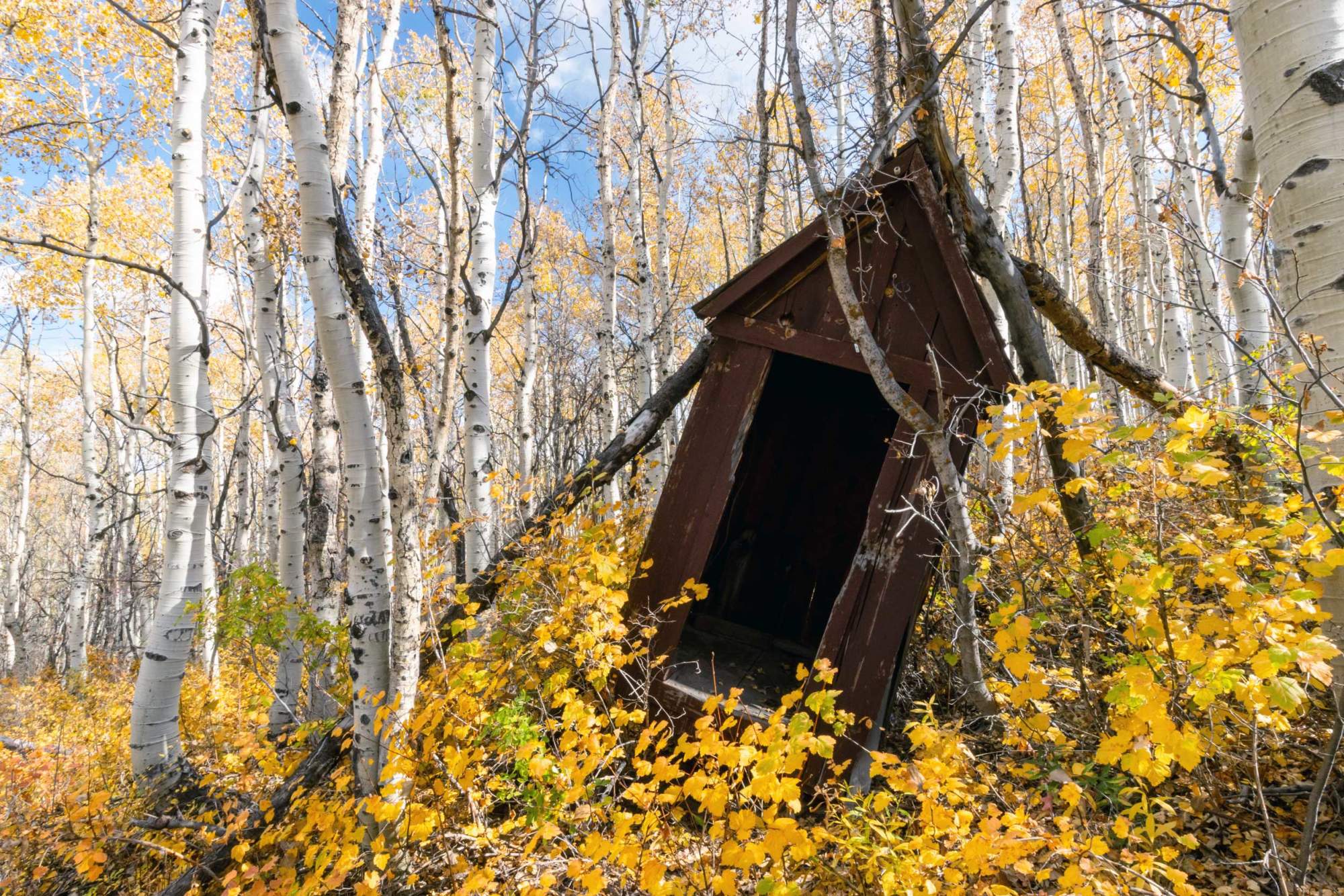
A friendly local walking his dogs passed us a few times and made sure we didn't miss a thing, including a fenced-off patch of subsidence where the ground has sunk above old mine workings.
The stretch up to the Silver King is the longest climb on the route. My heart rate went up, but the workout was welcome and the yellow aspens were a lovely distraction. Along the way, we couldn't resist leaning over to match a little red house perched on the hillside. Weathered and leaning, it still keeps watch over the trail, though it once had a more practical job: holding a hydrant and hose to protect the mines from fire. Taking our time, I found the whole route very doable, though I can't say the same for 2016 me, fresh off the move to Park City. If you're visiting from a lower elevation, give yourself some grace.
Standing at the Silver King
The Silver King Mining Complex is beautiful every time I see it, but I've mostly seen it covered in snow while zipping past on skis. This time, we slowed down for photos, the audio guide, and a few minutes of taking it all in.
A few things surprised me. Pigs once lived here and helped recycle food scraps and other organic waste. I never would have guessed miners were thinking about recycling back then! Today, it's part of everyday life here, from our office to the town, so it was fun to learn that spirit runs deeper in Park City than I knew. The headframe building stands today thanks to the Friends of Ski Mountain Mining History, the volunteer group that raised more than $1.6 million to restore it to how it looked in 1953, when mining stopped here. The 31-acre site around it became a National Historic District in December 2024.
Down Through Empire Canyon
From the Silver King, the route drops into Empire Canyon, and this is where it truly felt like an outdoor museum. The leaves were just starting to turn, and nearly every bend revealed another historic structure you can walk right up to.
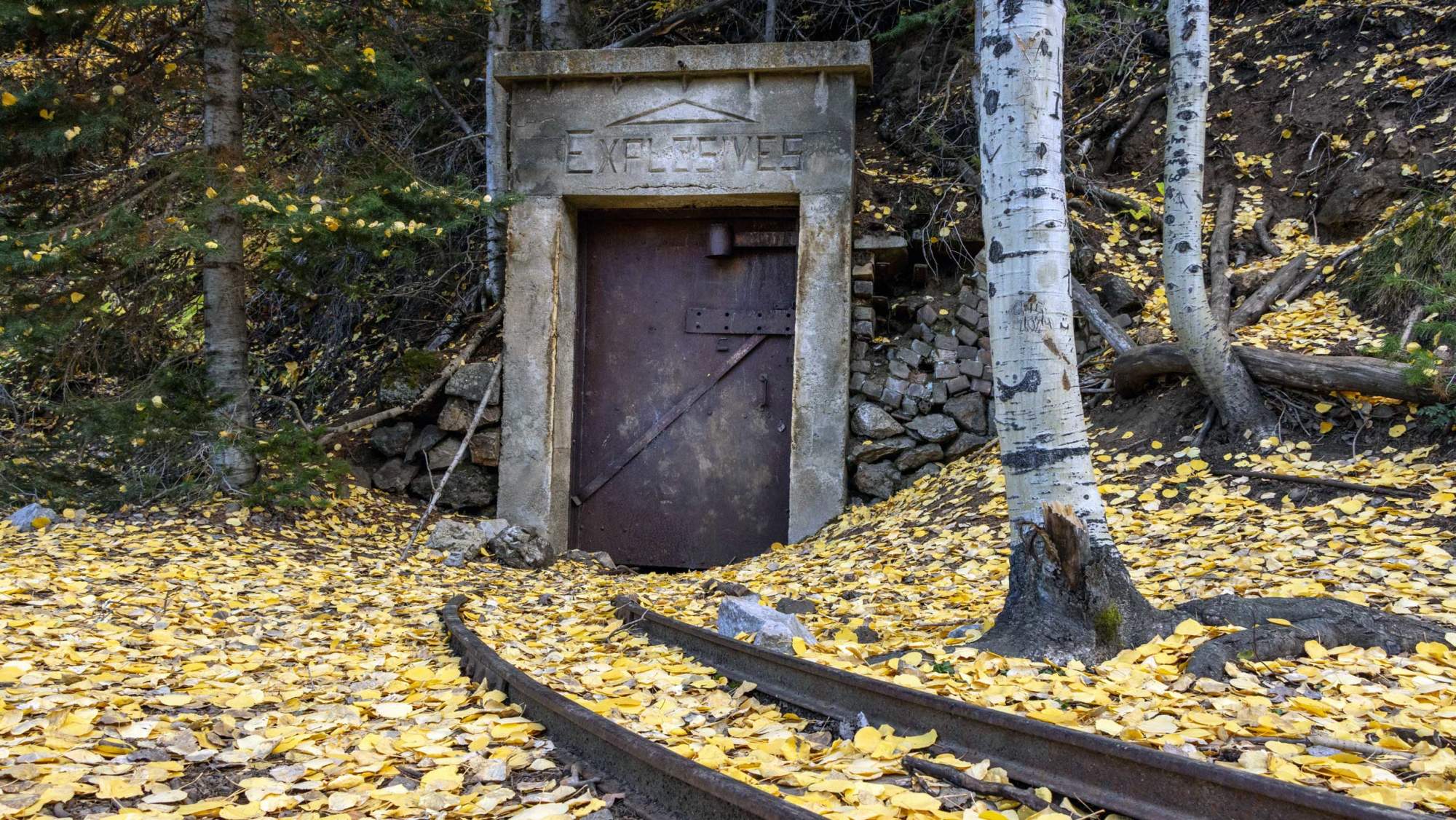
At the Judge Mining office, we felt a cool breeze blowing straight out of the tunnel. Nearby, a concrete bunker tells the story of a tragic explosion that changed the rules: afterward, mines could store no more than a day's worth of explosives. Decades later, a forgotten stash of dynamite even turned up during construction of the Montage, a reminder that these mountains still hold a few secrets. Listening to what happened to the miners here felt pretty morbid. I typically listen to true crime podcasts, so I didn't mind, but others might not be into it.
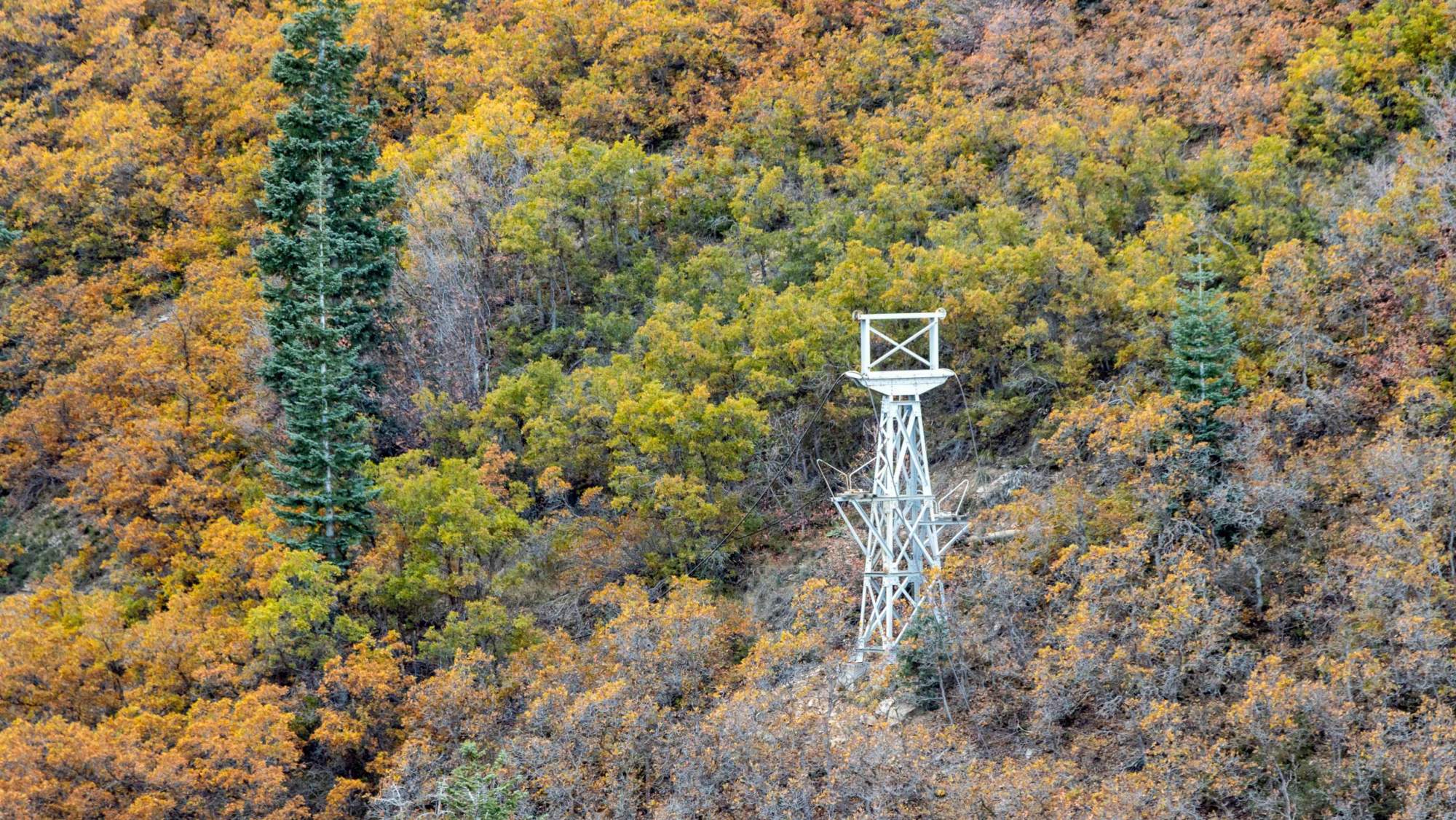
The Daly West Mine site is one of my favorite corners of Park City. John Daly founded three major mines here, and today his name lives on in the Daly Chutes and the Daly Grind mountain bike trail. I couldn't help wondering what he'd think of having recreational trails named after him nowadays. The Daly-Judge tram tower was another standout. It worked like a ski lift, only for ore, and modern chairlifts evolved from systems just like it. We ran into another group hiking the route there and offered to snap their photo. They were lovely and thought it was fun that we were all out doing the same thing.
Back to Main Street
After site #22, you can head back to town or keep exploring. We wanted the full experience, so we pushed on to the Ontario drain tunnel, where you can walk down and feel one last cool breeze. Watch the signs at these final sites, since some areas can expose you to harmful mining materials, and brush off your shoes and wash your hands afterward.
By then our stomachs were growling, so we wandered back down Main Street. The old storefronts looked different to me now, less like a backdrop and more like neighbors with long memories. Back at the museum, the same smiling faces and familiar artwork were waiting. We wrapped up the morning with lunch at Harvest, where we both ordered the same thing. I'm pretty sure a hungry miner in the 1890s would have had a few questions about a banh mi salad and an iced matcha latte.
Ten years in, Park City still finds ways to surprise me. Walking where miners once worked gave me a little perspective on my own life, and on how far this town has come. It also made me excited to see where it's headed next. Next time, my mountain bike is coming along. But for your first time, I'd recommend walking it. Take your time, listen to the stories, and leave each structure as you found it for the next hiker.
More Adventures in Park City
For even more inspiration and stories from Park City—view our year-round visitor guide or request one in the mail.